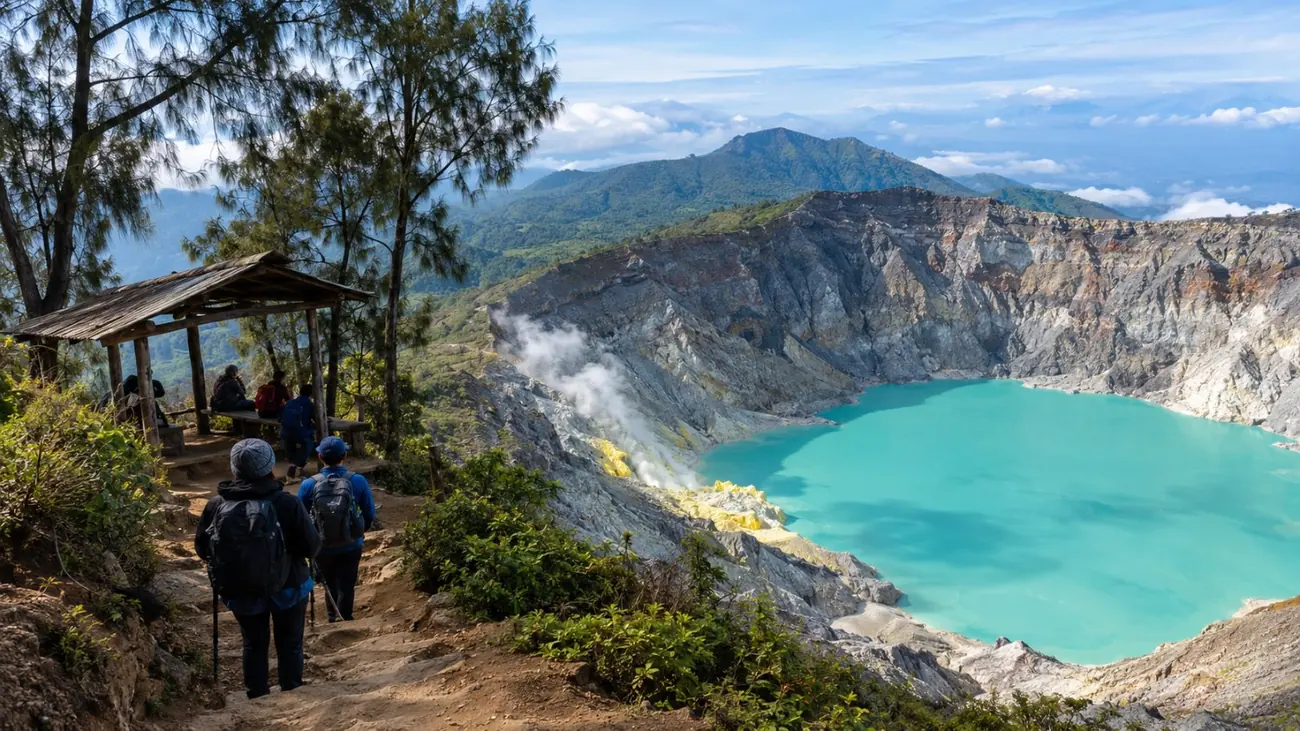
Booking choice: The all-inclusive Ijen hike, from $15 per person. Check dates Tour details
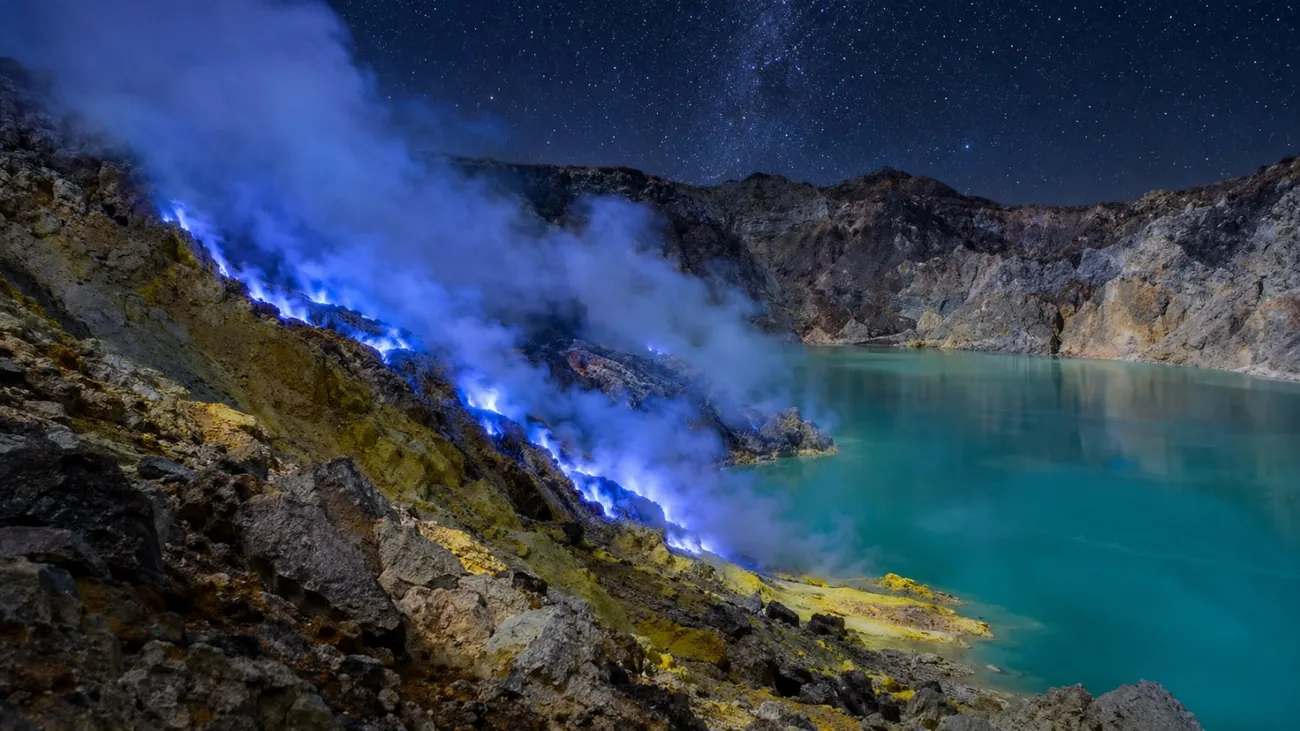
The blue fire is the reason most people hear about Kawah Ijen. It is also the part of the night nobody can promise you. The flames come and go with gas pressure, the mine puts them out to save its sulfur, and the volcano agency advises visitors to stay off the crater floor where they burn.
Book the hike, and treat the blue fire as a bonus. Here is what the flames are, why they are blue, how hot they are, and what the 2026 situation means for your night.
The quick answer
The blue fire is sulfur gas that leaves cracks in the crater floor at up to about 600°C and ignites in the air. It is not lava, and the blue colour comes from burning sulfur, not from extra heat. It burns day and night but only shows in darkness. In 2026 the mine often extinguishes it, and the press reports a ban on approaching it, so no tour can guarantee you will see it up close.
Why is there blue fire at Ijen?
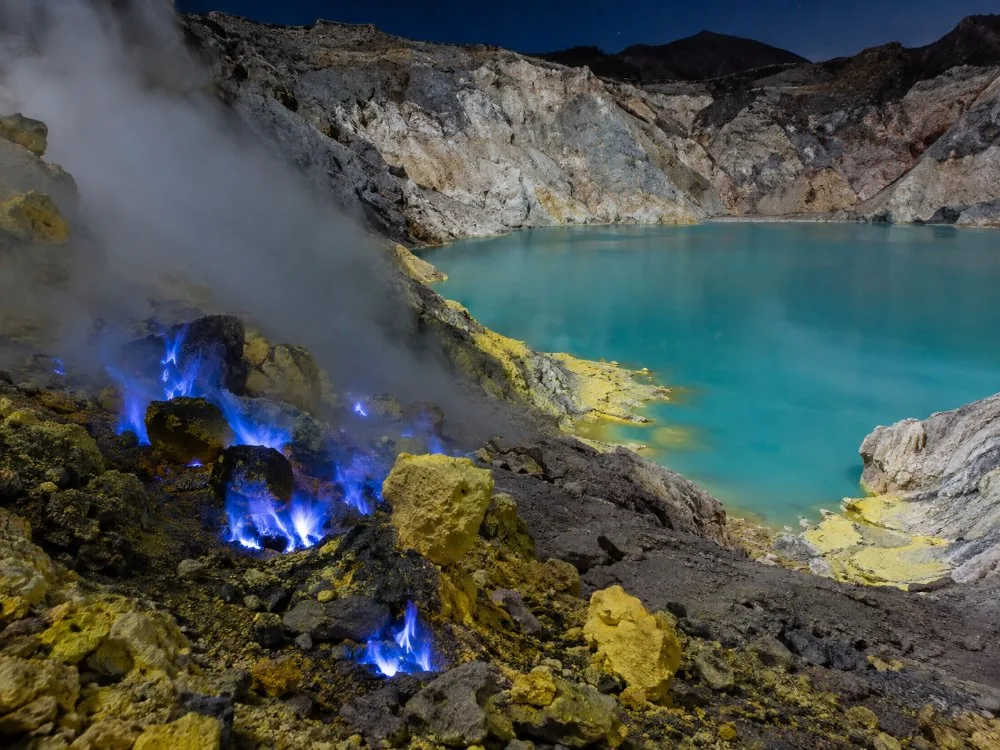
Sulfur gases escape from cracks in the crater at up to about 600°C and catch fire when they meet the oxygen in the air. Burning sulfur gives off blue light.
Geologist Mirzam Abdurrachman of ITB put it simply to kumparan in May 2026: the gas comes out at about 600°C, meets oxygen and burns blue. Some of it condenses into liquid sulfur that keeps burning as it runs down the rock, which is why photos show what looks like rivers of blue. The flames can reach about 5 m (Wikipedia).
Mirzam also called the flame the volcano's way of healing itself: it burns gas off instead of letting it spread. Ijen's mix of magma and sulfur-rich rock makes the conditions, one reason the area joined the UNESCO Global Geoparks in 2023.
Does Mount Ijen have blue lava?
No. There is no blue lava at Ijen. The blue is burning sulfur gas and liquid sulfur, and the lava itself stays deep inside the volcano, out of sight.
The "blue lava" photos that go viral are real pictures with the wrong caption. Snopes checked them with USGS geologist Peter Kelly, who said: "The blue flames result from the burning of sulfur vapor associated with the native sulfur deposits." French photographer Olivier Grunewald, who took the best-known shots in 2014, told Smithsonian the lava itself isn't blue, only the burning gas.
Ijen is a live volcano all the same. In January 2023 the agency raised it to Level II and kept visitors 1.5 km from the crater, which moved the trail opening from 2 a.m. to 4 a.m. and wiped out the blue fire for months (detikJatim). It went back to Level I, normal, on 1 August 2023 (ESDM) and sits there in October 2026.
Every night starts the same: a 2 a.m. walk up to the rim, with the crater floor decided on the spot.
Check dates for the all-inclusive Ijen hikeWhat is hotter, blue flame or lava?
Lava, by a long way. Ijen's gas leaves the vents at up to about 600°C; flowing lava in Hawaii runs at about 1,140 to 1,250°C.
Blue doesn't mean hotter here. On a gas stove a blue flame is a clean, hot one; at Ijen the colour comes from the sulfur itself. The figures:
| What | Temperature | Source |
|---|---|---|
| Gas at Ijen's vents | Up to about 600°C | Mirzam Abdurrachman, ITB |
| Sulfur gas burning in air | Above 360°C | Olivier Grunewald |
| Sulfur vapour self-igniting in air | Above about 230°C | Peter Kelly, USGS |
| Red-glowing rock | About 600 to 800°C | USGS |
| Kilauea lava at the vent | About 1,170°C | USGS |
Cool by volcano standards, then. Still far too hot to touch, and the gas around it is the real danger: see is Kawah Ijen safe.
Is the Ijen blue fire real or fake?
It is a real, natural fire. But in 2026 a viral video showed a guide lighting it with a lighter, and guests on one tour report sulfur chunks being lit for them.
The video went round in May 2026. Purwantono, head of the KSDA Region III office in Jember, told kumparan that lighting it was the guide's own initiative, to meet tourists' expectations. Mirzam warned that relighting is a bad idea: if the flame has gone out, other gases may be escaping, and the right move is to step away.
Guests write about it too. Gisella, in a one-star review of the midnight group tour in July 2026: "Terrible excursion. You can't see the lava; the guides light pieces of sulphur to simulate the effect." Another July 2026 guest, translated on the listing: "The blue fire comes from chunks of sulfur that are lit especially for this purpose." The natural flame exists. What you see on a given night may not be it.
Why does the blue fire only show at night?
It burns day and night, but daylight drowns it out. You need full darkness, which at Ijen means roughly 2 to 4:30 a.m.
Mirzam compared it to a blue gas flame in the sun: "Siang ini sebenarnya nyala, cuma tidak kelihatan", it is lit in the daytime, you just can't see it. It can also die down by itself when gas pressure drops, and come back when pressure and temperature rise again.
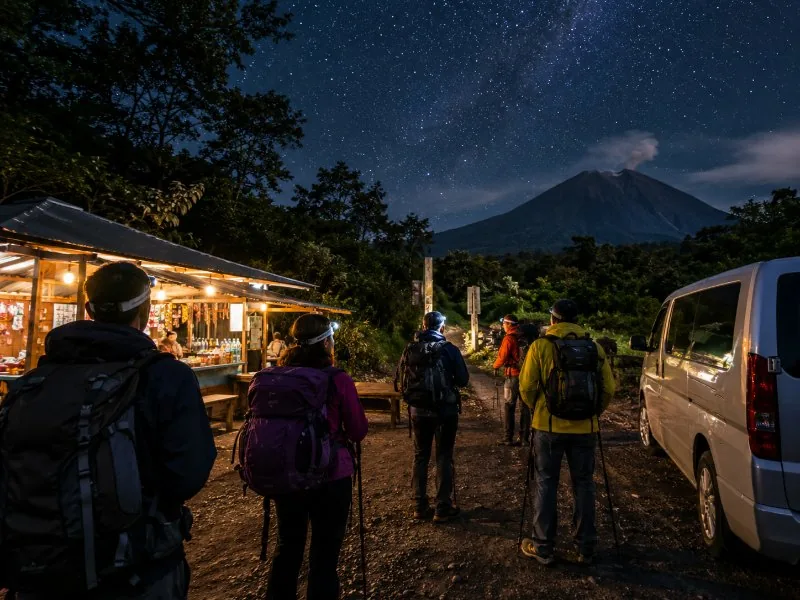
That is why every tour has the same clock. The gate at Paltuding opens at 2 a.m. (park portal), the walk up takes 1.5 to 2 hours, and the sky starts to lighten before 5. A group that goes down to the floor has maybe an hour of darkness left. One that stays on the rim sees, at best, a faint glow far below.
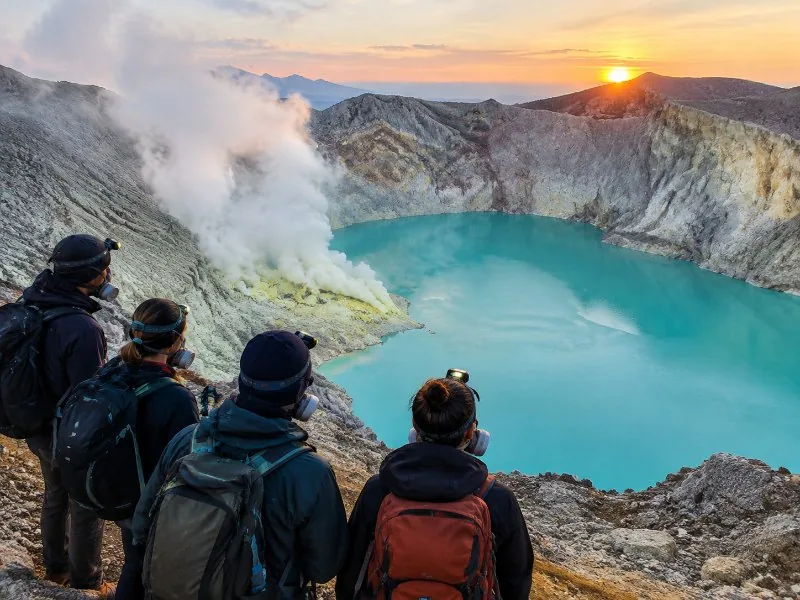
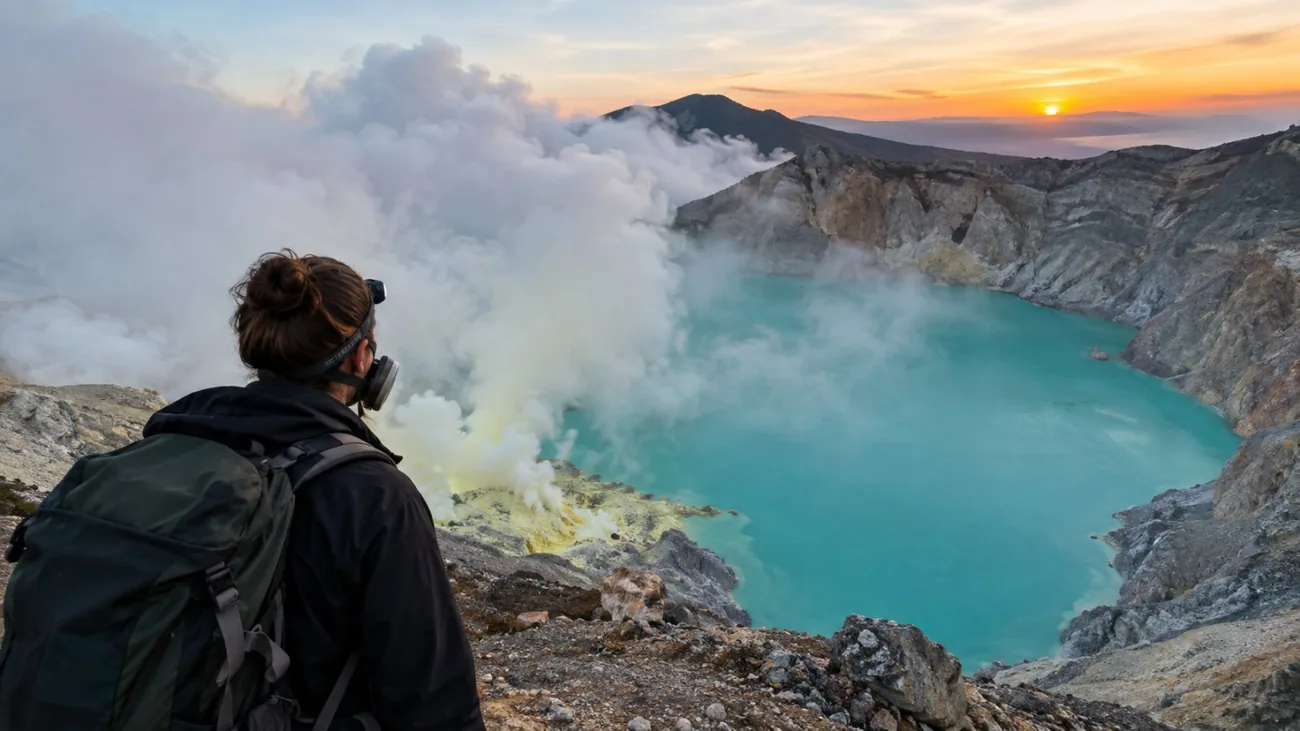
The standard night, done well: pickup, guide, gas mask, headlamp and health certificate, with the descent only if it is safe.
Explore the all-inclusive Ijen hike Tour detailsIs the Ijen blue fire open in 2026?
The rim is open; the fire is not something you can count on. The mine extinguishes it to protect production, and in October 2026 JawaPos reported a ban on approaching it.
Three things decide it, and none of them is your tour:
- The mine. Purwantono said the flames are routinely prevented or put out "agar tidak membakar habis belerang yang dihasilkan", so they don't burn up the sulfur being produced (kumparan).
- The volcano agency. PVMBG advises visitors not to go down toward the crater floor and not to stay within 500 m (ESDM).
- The rangers on the night. On 6 October 2026 a JawaPos caption said tourists now find it hard to enjoy the blue fire "karena ada larangan mendekat", because of a ban on approaching it.
Add the pipe works that hid the crater floor from November 2025 to about March 2026, and the forest fire that closed the park from 4 to 27 September 2026, and the pattern is clear. Our descent update tracks the latest.
Tours write it plainly: the 600 m descent happens only if it is safe and your guide approves it.
Check dates for the all-inclusive Ijen hikeIs the blue fire harmless?
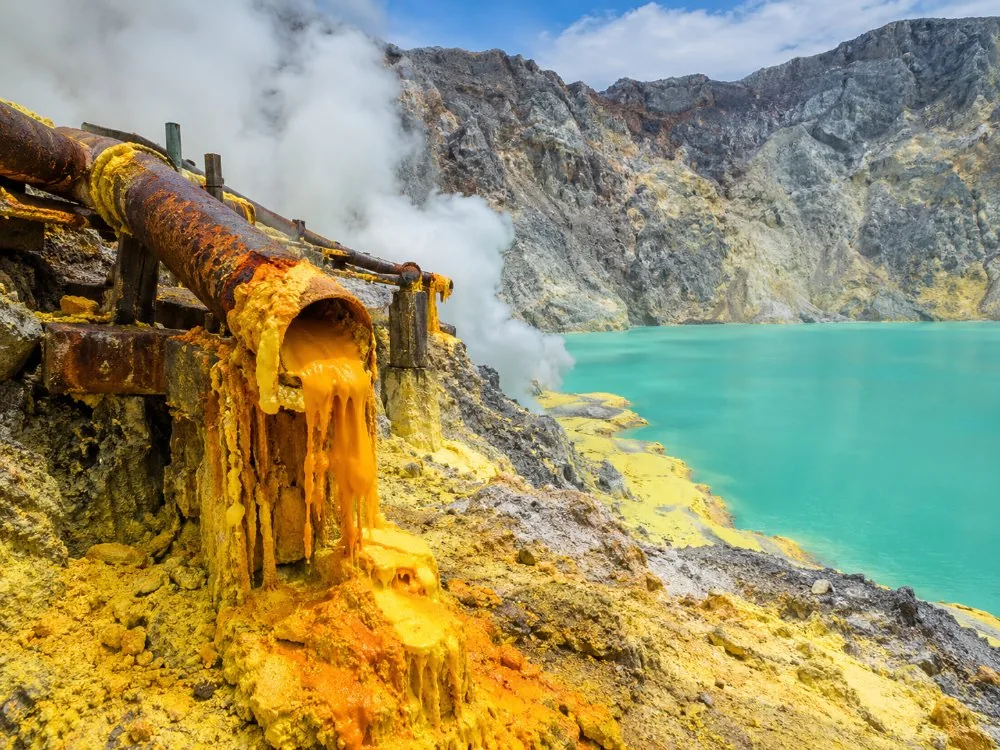
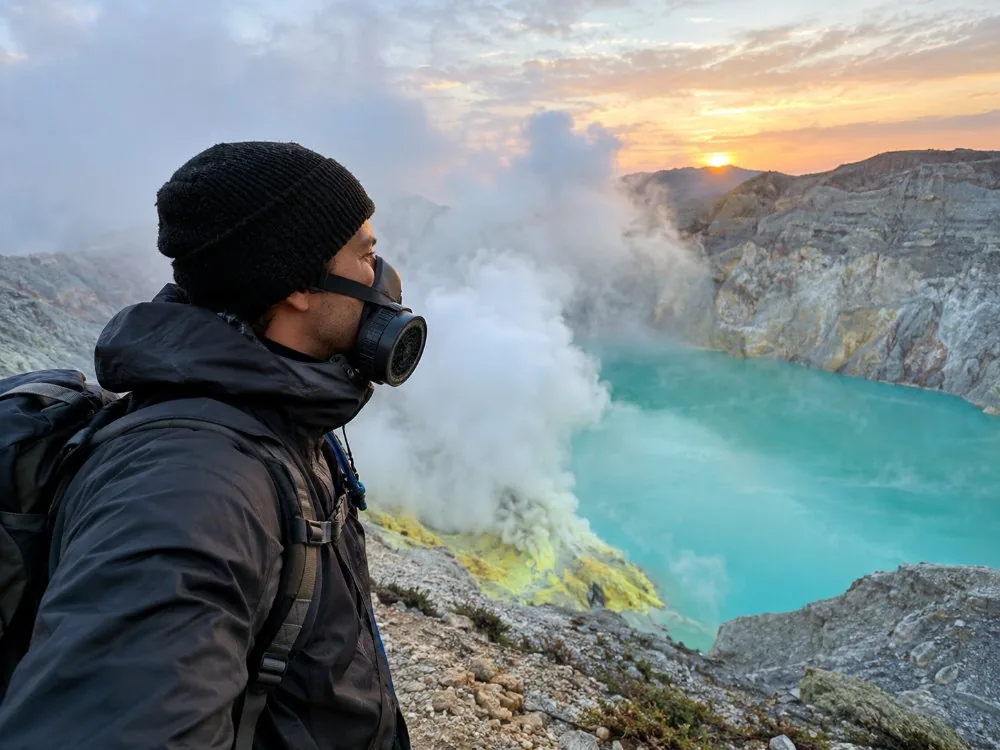
No. The flame itself is small, but it burns in a cloud of sulfur dioxide and hydrogen sulfide, on loose rock, in the dark.
When blue fire showed up at Kawah Manuk on Mount Papandayan in West Java in September 2026, disaster expert Daryono listed the same warnings that apply at Ijen (iNews): don't approach the crater for photos, stay away from vents and cracks, don't linger in hollows where gas collects, and leave at once if your eyes or throat sting or you feel dizzy.
Back in 2022, East Java's conservation office said the blue flame isn't even an attraction it offers; the park sells the sunrise and the crater view (detikJatim). That is a fair way to plan your night.
Where else can you see a blue flame?
Almost nowhere. Ijen has the largest blue-flame area known; the other site usually named is Dallol in Ethiopia, and Papandayan in Java flared in 2026.
Dallol is a hydrothermal field in Ethiopia's Danakil Depression, driven by heated groundwater, not magma. Its flames appear only when conditions line up (Snopes). Papandayan's flames at Kawah Manuk on 23 and 24 September 2026 made Indonesian news because they are so rare there.
For a traveller, Ijen is the only one with a nightly hike, a guide system and a gate that opens at 2 a.m. If the fire is your main reason to go, read is Ijen worth it first.
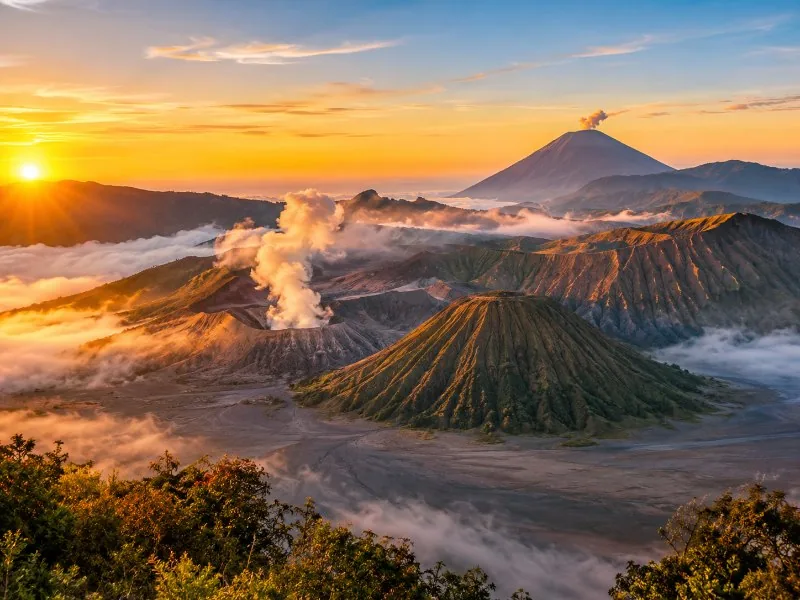
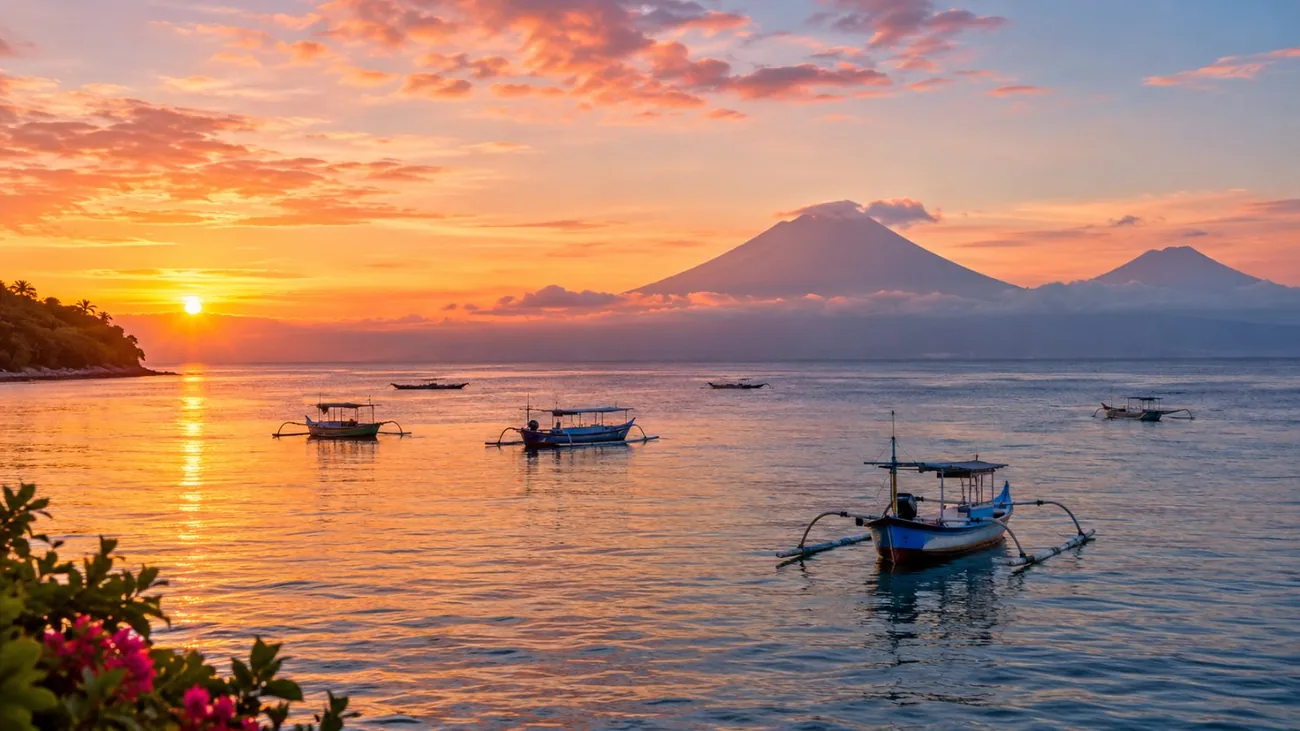
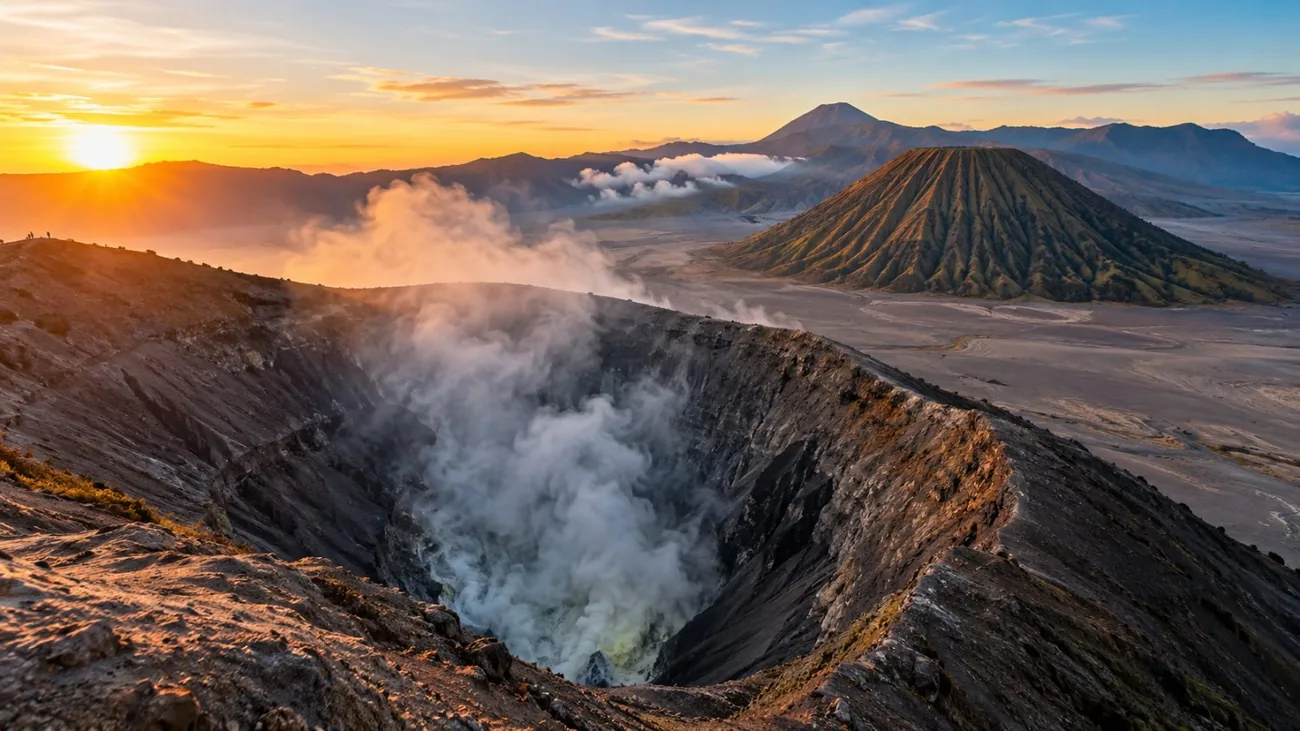
Three days, three sights: Tumpak Sewu waterfall, the Bromo sunrise and the Ijen night hike, ending in Bali.
Explore the 3-day Bromo and Ijen route Tour detailsFrequently asked questions
Is the blue fire guaranteed on an Ijen tour?
No. Every listing on this site says so in some form. The descent depends on the rangers, the gas and the mine, and in October 2026 the press reported a ban on approaching the fire.
Can you see the blue fire from the crater rim?
Sometimes as a faint glow far below, on a dark night when the fire is burning. The close-up views in photos come from the crater floor.
Does the blue fire burn every night?
The gas burns day and night when it is lit, but it can die down naturally, and the mine regularly puts it out to protect its sulfur.
What is special about blue fire?
Burning sulfur is one of the few natural flames that glow electric blue, and Ijen has the largest such area known on Earth.
Ready to book
Choose your night
Free cancellation up to 24 hours before on every option. Prices are from-prices in USD and move with the season.
Ijen Sunrise Hike, All Inclusive
- Park entry ticket, guide and gas mask
- Headlamp and the required health certificate
- Pickup in Banyuwangi, or Bali with the ferry
Ijen Blue Fire Midnight Group Tour
A driver only, or a shared group of 15 to 20 with a guide
Tumpak Sewu, Bromo & Ijen in 3 Days
- Tumpak Sewu, Bromo and Ijen entry fees
- Jeep at Bromo, local guides at each stop
- Two nights: guesthouse and 3-star hotel (or hostel)